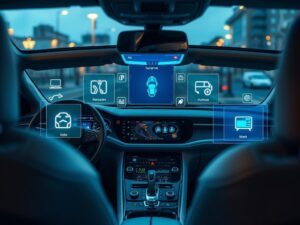
Innovative Insurance for Connected and Autonomous Vehicles
Read Time:2 Minute, 59 Second
The emergence of connected and autonomous vehicles (CAVs) is transforming the automotive landscape, bringing far-reaching effects not only for mobility but also for the insurance industry. Drawing on ten years as a technical copywriter in this area, I will examine the latest insurance innovations designed to address the specific risks and opportunities created by CAVs.
The Evolution of Vehicle Technology
Connected Vehicles
Connected vehicles include sophisticated sensors, GPS, and communication modules that enable continuous data sharing with other cars and infrastructure. These systems let vehicles gather and relay vital information about driver behavior, roadway conditions, and potential dangers in real time.
Autonomous Vehicles
Autonomous, or self-driving, vehicles expand on this technology by using artificial intelligence and machine-learning models. Capable of operating without human control, they aim to improve safety and efficiency on the roads.
The Impact on Insurance
Risk Reduction
CAVs could considerably lower both the occurrence and seriousness of collisions. Advanced driver-assistance systems (ADAS) in connected cars help prevent crashes, while autonomous systems are engineered to reduce human mistakes, a primary factor in accidents. Consequently, insurers expect claims to decline.
New Types of Liability
As vehicles gain autonomy, responsibility for accidents may move from individual drivers to manufacturers or software providers. Insurers are developing liability coverage options that address the novel risks tied to CAVs.
Data-Driven Insights
Connected vehicles produce large volumes of information about driving patterns, vehicle health, and road conditions. Insurers are using these data to craft tailored policies that price risk more equitably according to each driver’s profile.
Innovations in CAV Insurance
Usage-Based Insurance (UBI)
Usage-based insurance uses live data from connected cars to set premiums. Motorists are charged based on their actual driving behavior, with safer drivers rewarded through reduced rates. UBI promotes safer habits and can cut costs for policyholders.
Pay-As-You-Drive (PAYD)
Pay-as-you-drive schemes bill policyholders according to the miles they log. Data from connected vehicles enables precise mileage tracking, giving a clearer reflection of risk and expense for the insured.
On-Demand Insurance
On-demand insurance lets drivers activate coverage only when using their vehicles, for example during a ride-share trip. This flexible option matches insurance costs to actual usage and can reduce premiums for infrequent drivers.
Challenges and Considerations
Data Privacy
Collecting and exchanging data from connected vehicles raises important privacy and security issues. Insurers must implement strong data protection practices and comply with privacy laws to address these concerns.
Regulatory Framework
Regulation of the insurance sector can lag behind rapid CAV developments. Insurers should work with regulators to shape and update rules that enable the expansion of CAV-focused insurance products.
Ethical and Legal Complexities
Autonomous vehicles introduce challenging ethical and legal dilemmas, especially around accident liability. Insurers will need to address these complexities when designing comprehensive coverage solutions.
The Road Ahead
As connected and autonomous vehicles become more common, the insurance industry must adapt to satisfy evolving policyholder needs. Innovations like usage-based, pay-as-you-drive, and on-demand insurance are reshaping how policies are priced and purchased.
Insurers are also pouring resources into AI and data analytics to refine risk assessment and customize policies for individual drivers. This analytical approach should produce more accurate pricing and a fairer market.
In summary, insurance for connected and autonomous vehicles is undergoing significant change. These advancements promise safer roads, lower insurance expenses, and greater flexibility for customers. As technology progresses and regulations evolve, insurers are positioned to support the automotive transition with comprehensive coverage for a safer, more connected driving future.


Happy
0 %

Sad
0 %

Excited
0 %

Sleepy
0 %

Angry
0 %

Surprise
0 %
 0
0
 0
0